
Construct Fairer Groups for Weekly Beginner Soccer

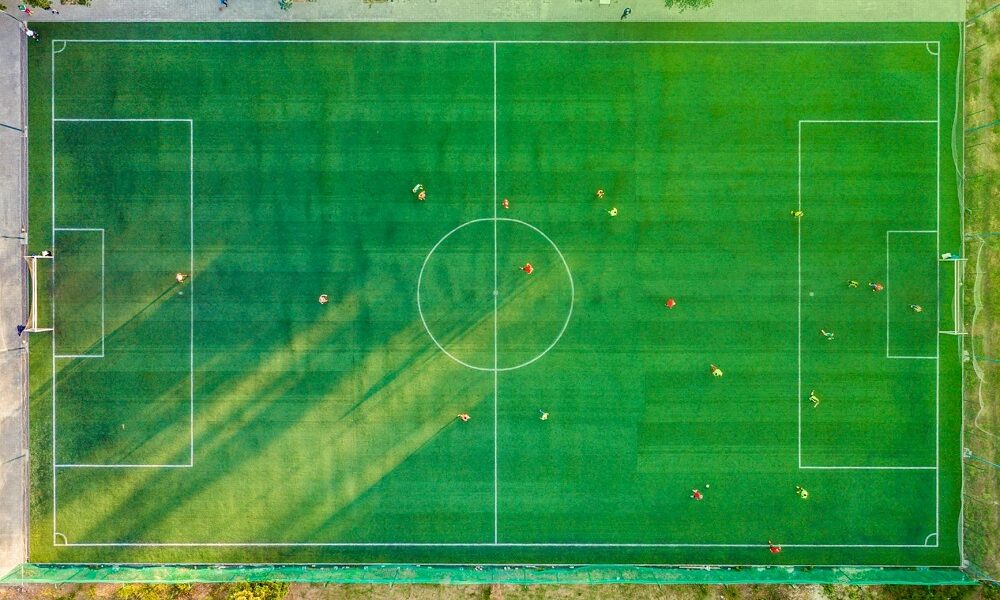
For anybody who organises an everyday novice soccer recreation, getting sufficient gamers is just half the job. As soon as everybody has confirmed, one other drawback begins: how do you divide them into two groups that may really produce a aggressive match?
It sounds easy. Put the perfect participant on Staff A, the second-best on Staff B, proceed alternating names, and begin taking part in.
In follow, that method usually fails.
Two groups can look equally robust on paper and nonetheless produce a one-sided recreation. Participant positions matter. Goalkeepers matter. Taking part in kinds matter. And in an everyday group, organisers additionally should account for altering availability, bettering gamers and what occurred in earlier matches.
There isn’t a good system for creating balanced soccer groups, however there are a number of methods to make the method significantly extra dependable.
Begin With Participant Potential, Not Random Choice
Random crew choice is truthful in a single sense: no person controls the result.
However random doesn’t imply balanced.
Think about a gaggle of ten gamers containing three significantly robust gamers. A random draw may simply put all three on the identical five-a-side crew. The choice course of was unbiased, however the ensuing match most likely won’t be.
For informal one-off video games, that will not matter. For a gaggle taking part in each week, repeated mismatches shortly turn out to be irritating.
A greater place to begin is to provide every participant a tough means ranking.
It doesn’t should be subtle. A easy scale can already assist distinguish stronger, common and growing gamers.
The target is then to minimise the distinction between the mixed power of the 2 groups.
For instance, if the entire estimated power of Staff A is 350 and Staff B is 347, that’s typically a greater place to begin than groups with totals of 390 and 307.
The numbers will not be imagined to predict precisely what is going to occur. They merely give the organiser a extra constant foundation for making the preliminary break up.
Do Not Deal with Each Participant With the Identical Score as Similar
Rankings alone can’t describe a footballer.
Two gamers would possibly each be thought of 70 out of 100 whereas contributing utterly various things to a crew.
One may be a defender who reads the sport nicely however not often scores. One other might be a fast attacker who creates probabilities however provides little defensively.
If each groups have an an identical complete ranking however one accommodates almost all of the defenders and the opposite accommodates a lot of the attacking gamers, the sport should really feel unbalanced.
This is the reason positions must be handled as a second layer quite than ignored utterly.
You do not want to assign everybody an actual tactical function. Even broad classes equivalent to goalkeeper, defender, midfielder and attacker can reveal apparent issues in a proposed draw.
The ranking supplies the start line. The composition of every crew supplies the fact test.
Goalkeepers Can Change Every little thing
Goalkeeper power is especially vital in small-sided soccer.
In an eleven-a-side match, a person goalkeeper is one participant amongst eleven. In five-a-side, the goalkeeper represents 20% of the crew on the pitch.
That makes variations between goalkeepers far more influential.
If one aspect has an everyday goalkeeper and the opposite has an unwilling outfield participant taking turns in objective, two in any other case balanced groups might not be balanced in any respect.
Organisers ought to due to this fact think about goalkeepers individually when reviewing a draw.
The place attainable, put comparable goalkeepers on reverse groups. If that’s unimaginable, the distinction can generally be compensated for elsewhere within the squads.
The identical precept applies to teams with out everlasting goalkeepers. If gamers rotate in objective, be certain one crew doesn’t by accident include each participant who’s comfy taking part in there.
Keep away from Concentrating the Strongest Gamers
One frequent mistake is wanting solely at complete crew power.
Suppose two groups each have a complete ranking of 350.
Staff A may include rankings of:
90, 85, 65, 60, 50.
Staff B may include:
72, 71, 70, 69, 68.
Mathematically, the groups are very shut.
On the pitch, nevertheless, they might behave very otherwise.
Staff A has two gamers able to dominating the sport individually. Staff B is far more evenly distributed.
Relying on the format and taking part in kinds, both construction may have a bonus.
This is the reason the strongest gamers ought to often be distributed between the groups quite than permitting a number of of them to cluster collectively just because the totals nonetheless match.
For normal teams, organisers usually be taught this intuitively. A participant could mix significantly nicely with one other, or two robust attackers collectively could also be significantly extra harmful than their particular person rankings counsel.
The objective shouldn’t be mathematical perfection. It’s to keep away from apparent concentrations of power.
Use Earlier Matches as Suggestions
One of many largest benefits of organising the identical group repeatedly is that each match offers you new info.
If a recreation ends 10-1, one thing most likely went mistaken with the crew choice.
That doesn’t essentially imply each participant ranking was incorrect. Maybe one crew lacked a goalkeeper. Maybe a number of gamers carried out unusually nicely or badly. Maybe the taking part in kinds merely produced a poor matchup.
However the end result ought to nonetheless affect future choices.
That is the place recurring teams have a bonus over one-off pickup video games. Organisers can step by step be taught which mixtures produce aggressive matches.
As a substitute of treating each weekly draw as an remoted occasion, earlier video games can kind a suggestions loop:
create groups → play → observe the end result → modify → create higher groups subsequent time
Over sufficient matches, that is much more helpful than repeatedly ranging from scratch.
Rankings Ought to Be Allowed to Change
A static ranking finally turns into a nasty ranking.
Gamers enhance. Others lose health. Somebody returning after six months away could not initially carry out at their earlier stage. New gamers are particularly tough to guage from one look.
For that purpose, participant power must be handled as an estimate that evolves over time.
An organiser doing this manually would possibly modify rankings often after observing a number of video games.
Teams that need a extra systematic method can use a soccer crew administration instrument equivalent to FootDraw, which mixes participant rankings with recurring match administration and rating-based crew balancing.
The vital precept is similar whether or not the method is handbook or automated: rankings ought to reply to proof quite than changing into everlasting labels connected to gamers.
Be Cautious With Fixed Handbook Changes
As soon as groups have been generated, there’s all the time a temptation to maintain altering them.
“This crew seems to be stronger.”
“Transfer him over there.”
“They performed collectively final week.”
“These two shouldn’t be on the identical aspect.”
Some handbook judgement is helpful. An excessive amount of can defeat the aim of getting a constant balancing course of.
If the organiser modifications 5 gamers after each draw, private notion turns into the algorithm once more.
A greater method is to make handbook modifications solely when there’s a clear soccer purpose — for instance, no goalkeeper on one aspect or an excessive positional imbalance.
Then play the match and use the end result as one other piece of proof.
Attendance Makes the Drawback More durable
Weekly soccer teams not often have precisely the identical squad accessible each time.
One week there could also be ten gamers. The following week twelve. A powerful participant cancels on the final minute and is changed by somebody utterly new.
This implies organisers will not be actually fixing the identical balancing drawback each week.
They’re fixing a brand new model of it with a altering pool of gamers.
That’s another excuse fastened mixtures equivalent to “these 5 all the time play collectively” usually turn out to be impractical.
A helpful balancing system must work with whoever is definitely accessible that week.
Verify attendance first, set up the ultimate participant pool, and solely then create the groups.
In any other case each late cancellation can pressure your complete course of to start once more.
What Does a Good Draw Really Look Like?
A superb draw doesn’t assure a draw on the scoreboard.
Soccer accommodates an excessive amount of randomness for that.
A balanced match can end 6-2 as a result of one crew was unusually scientific. A supposedly weaker crew can win as a result of its gamers talk higher. A goalkeeper can have an distinctive recreation.
The aim of balancing is due to this fact to not predict the ultimate rating completely.
It’s to create an affordable place to begin the place each groups have a sensible probability of successful.
A superb crew choice often has a number of traits:
- Related general participant power
- Robust gamers distributed between the edges
- Cheap positional stability
- Comparable goalkeeping choices
- No apparent focus of attacking or defensive high quality
- Changes knowledgeable by earlier matches
If these situations are met, the organiser has completed most of what can moderately be completed earlier than kickoff.
The remaining is soccer.
Consistency Issues Extra Than Perfection
There’ll by no means be an ideal technique for dividing novice soccer gamers.
Even skilled soccer groups with analysts, coaches and massive quantities of efficiency information can’t predict precisely how a match will unfold.
For novice organisers, the target must be easier: make the method truthful, repeatable and able to bettering over time.
Begin with approximate participant means. Test positions and goalkeepers. Keep away from concentrating the strongest gamers. Study from earlier outcomes. Replace your assumptions as gamers change.
Most significantly, use the identical fundamental rules each week.
When gamers perceive that groups are created via a constant course of quite than one individual’s desire, the weekly debate over whether or not the groups are truthful turns into a lot simpler to handle.
And that leaves extra time for the half everybody really turned up for: taking part in soccer.
Writer: Harout — Founding father of FootDraw



Responses